
Common Etsy Shop Launch Mistakes & How to Avoid Them
Most Etsy shop launch mistakes are not dramatic. They are usually small gaps in preparation that make the shop harder for a buyer to understand—or harder for the seller to operate once orders begin.
The goal is not to eliminate every possible mistake before opening. It is to catch the issues that can affect clarity, pricing, fulfilment and buyer confidence while leaving room to improve with real experience.
Here are eight common launch mistakes worth checking before you publish your shop.
Opening before you know whether the product belongs on Etsy.
A polished storefront cannot fix a product that does not fit the marketplace. Etsy currently requires items to be made, designed, handpicked or sourced by the seller in accordance with its Creativity Standards, and sellers are responsible for ensuring their items comply with Etsy policies.
Before investing heavily in branding or listing creation, confirm that what you plan to sell is eligible and that you understand the rules that apply to it.
Trying to launch without a clear offer.
A shop can contain attractive products and still feel confusing if buyers cannot quickly understand what is being sold, who it is for or why one option differs from another.
You do not need an enormous catalogue. A smaller, coherent launch collection can make it easier to write listings, create imagery and explain the shop consistently.
More products do not automatically make a shop more launch-ready. Clarity is usually more useful than volume.
Treating listings as a last-minute upload task.
Your listings do much of the communication work once a shopper arrives. Etsy’s current guidance emphasizes clear titles, useful descriptions, accurate categories and attributes, relevant tags, strong imagery and realistic processing information.
Etsy currently allows sellers to add up to 13 tags to a listing. Its current title guidance also recommends clearly stating what the item is and avoiding unnecessary repetition. Those details are worth preparing deliberately rather than filling them in while rushing to launch.
Not sure what you may be overlooking?
The free Etsy Shop Readiness Scorecard helps you review eight key areas, see what is already clear and identify what may need attention before you open.
Get the Free Scorecard →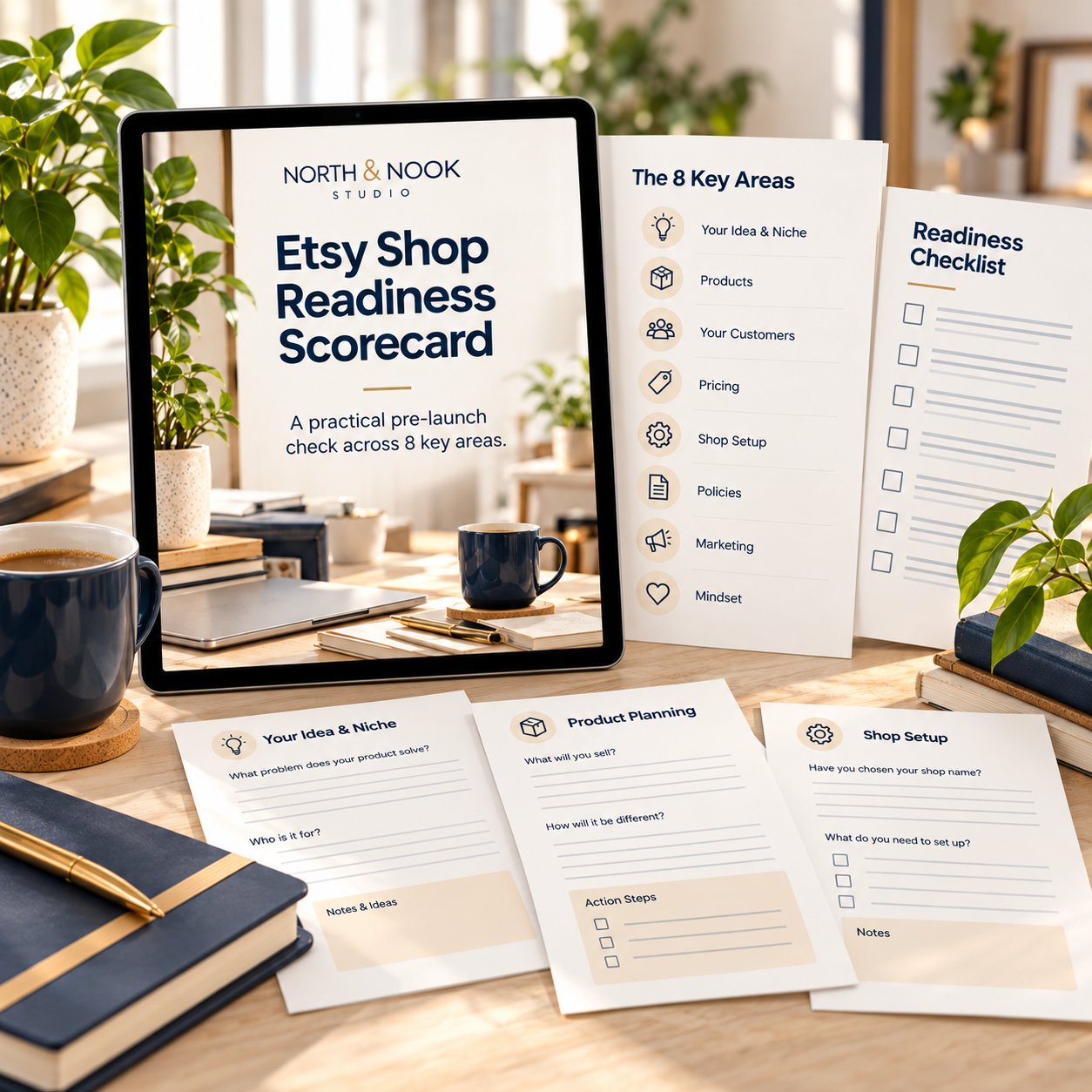
Pricing from the product cost alone.
Pricing needs to account for more than materials or the time spent making the item. Etsy currently charges listing, transaction and payment-processing fees, and other charges can apply depending on the seller, location and services used.
For example, Etsy currently lists a US$0.20 listing fee and a 6.5% transaction fee. Payment-processing fees vary by country, and Etsy says a one-time shop set-up fee may also apply and varies by location. Check the current fee information for your own shop rather than relying on an old screenshot or calculator.
Know what the sale actually has to cover.
Leaving policies and fulfilment decisions until after the first order.
Before a buyer purchases, they may want to understand shipping, returns, exchanges, processing or other conditions that apply. Etsy’s current shop-opening guidance specifically tells sellers to outline applicable shop policies and set up shipping information where relevant.
The seller also needs a practical answer to a simpler question: what happens after someone buys? Thinking through that process before launch reduces avoidable scrambling later.
Your first sale should trigger a process you have already thought through—not a brand-new set of decisions.
Assuming opening the shop is the traffic plan.
Publishing a shop makes it available to shoppers; it does not remove the need to think about discovery. Etsy provides search tools and guidance, but sellers can also bring visitors through channels they control or use elsewhere.
Choose a realistic starting plan. That might include improving Etsy search visibility, sharing launch content with an existing audience, using Pinterest where it fits the product, or building other relevant traffic sources over time.
Waiting for everything to feel perfect.
There is a difference between correcting an important gap and endlessly polishing details that can safely evolve after launch. A shop needs accurate products, usable listings, workable fulfilment and clear buyer information. It does not need every future idea completed on day one.
Use a simple filter: fix anything that could confuse a buyer, create an operational problem or materially affect the purchase. Put lower-priority improvements on a post-launch list.
Launching without deciding what you will review afterward.
Opening the shop is the beginning of the feedback cycle. Decide in advance what you will look at during the first few weeks: which listings are attracting attention, what questions buyers ask, where people seem to hesitate and which parts of your process take more time than expected.
A planned review gives you a reason to make targeted improvements instead of changing everything at once.
Build the shop with the whole launch in view.
The Etsy Shop Launch Lab is North & Nook Studio’s complete digital Etsy launch system, combining the course with implementation tools, worksheets, templates, checklists, examples and resources for a more organized path from preparation through launch.
Explore the Etsy Shop Launch Lab →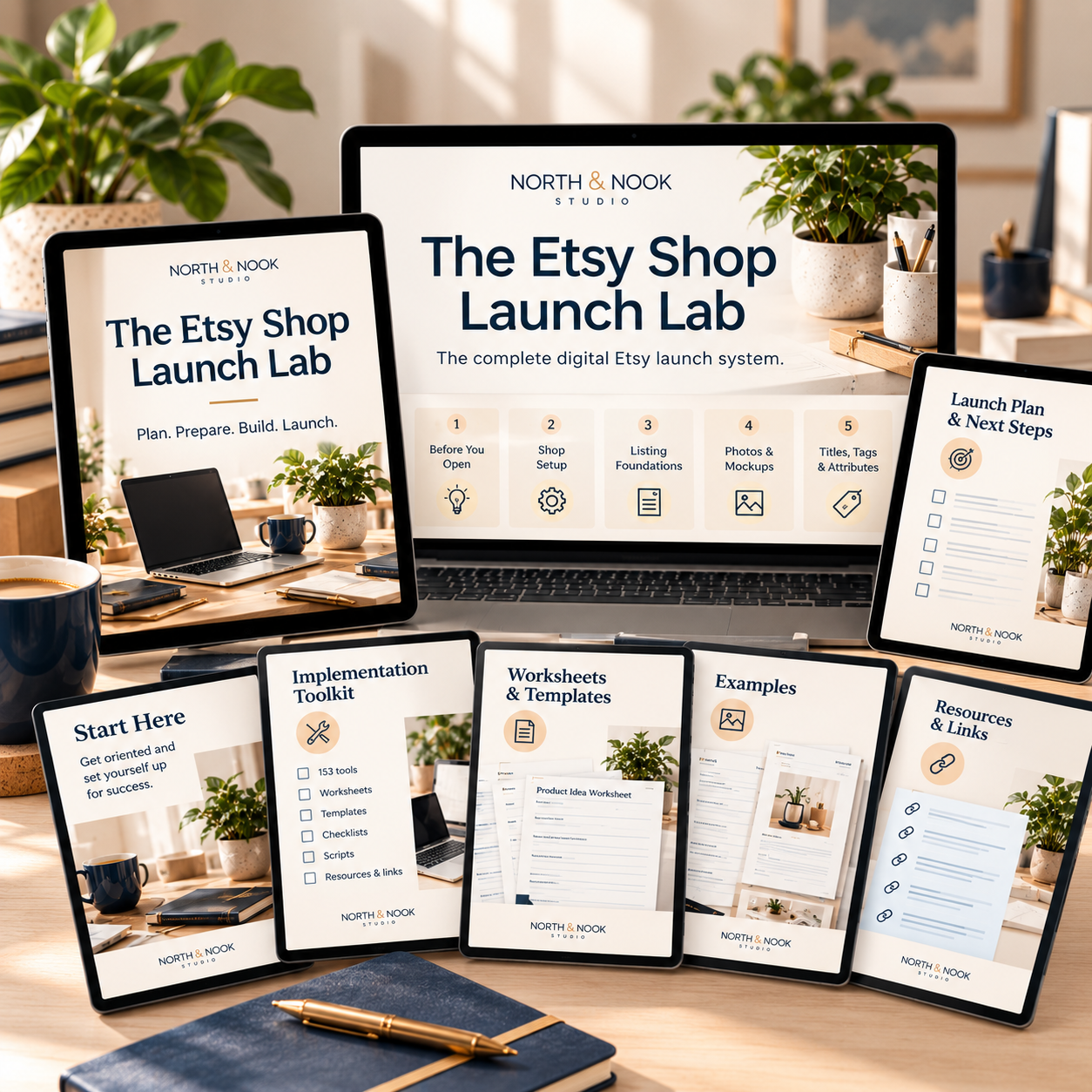
A better launch is usually built by resolving the right things—not by doing everything.
Check the parts that affect eligibility, buyer clarity, pricing, fulfilment and discovery. Then launch with a short list of improvements you can make once you have real information to work with.
If you want a quick way to identify where your own preparation may be thin, start with the free Etsy Shop Readiness Scorecard.
Current Etsy references
Etsy’s selling rules, listing guidance and fees can change. Platform-specific details in this guide were checked against Etsy’s official Help Center in September 2026. Verify current requirements when you create or update your shop.
Etsy Help: What Can I Sell on Etsy? · How to Create a Listing · How to Open an Etsy Shop · Fees and Taxes for Selling on Etsy