
Opening an Etsy shop can be relatively quick. Preparing one thoughtfully takes more than choosing a shop name and uploading a product photo.
Before you open, you want enough clarity to make deliberate decisions about what you sell, who it is for, what it costs to offer, how the shop will work and what a buyer will experience when they find you.
This guide is not about making everything perfect before you begin. It is about reducing avoidable guesswork so you can open with a foundation you understand—and a plan for what comes next.
Start with a clear, Etsy-eligible product idea.
Before thinking about banners, fonts or social posts, make sure you can explain what you intend to sell in plain language. A useful starting point is a product or product family with a recognizable purpose, audience and reason to exist.
Etsy currently says items sold on its marketplace must be made, designed, handpicked or sourced by the seller, within its Creativity Standards and other policies. For digital products, Etsy says the files must be made and/or designed by the seller. Check eligibility before investing heavily in a shop concept, because platform rules can change.
You do not need certainty that an idea will succeed. You do need enough clarity to decide whether it deserves your time, attention and investment.
Know who you expect to buy it.
“Everyone” is not a useful customer definition. Think about the person most likely to search for, understand and value what you are offering.
What are they trying to accomplish? What language might they use to describe the product? What matters when they compare options—style, personalization, convenience, materials, price, delivery time or something else?
Four questions worth answering first.
Understand the numbers before choosing the price.
A price should do more than look competitive. Identify the costs attached to creating, packaging and delivering the product, the platform and payment costs that may apply, and the time involved in fulfilling an order.
Etsy currently charges seller fees that can include listing, transaction and payment-processing fees, plus other fees in some circumstances. Etsy also states that a one-time, non-refundable shop set-up fee may apply and varies by location. Because fees can change, verify Etsy’s current fee information when you build your pricing.
How ready is your Etsy shop?
Use the free Etsy Shop Readiness Scorecard to check your readiness across eight key areas and identify where you may want to focus before you launch.
Get the Free Scorecard →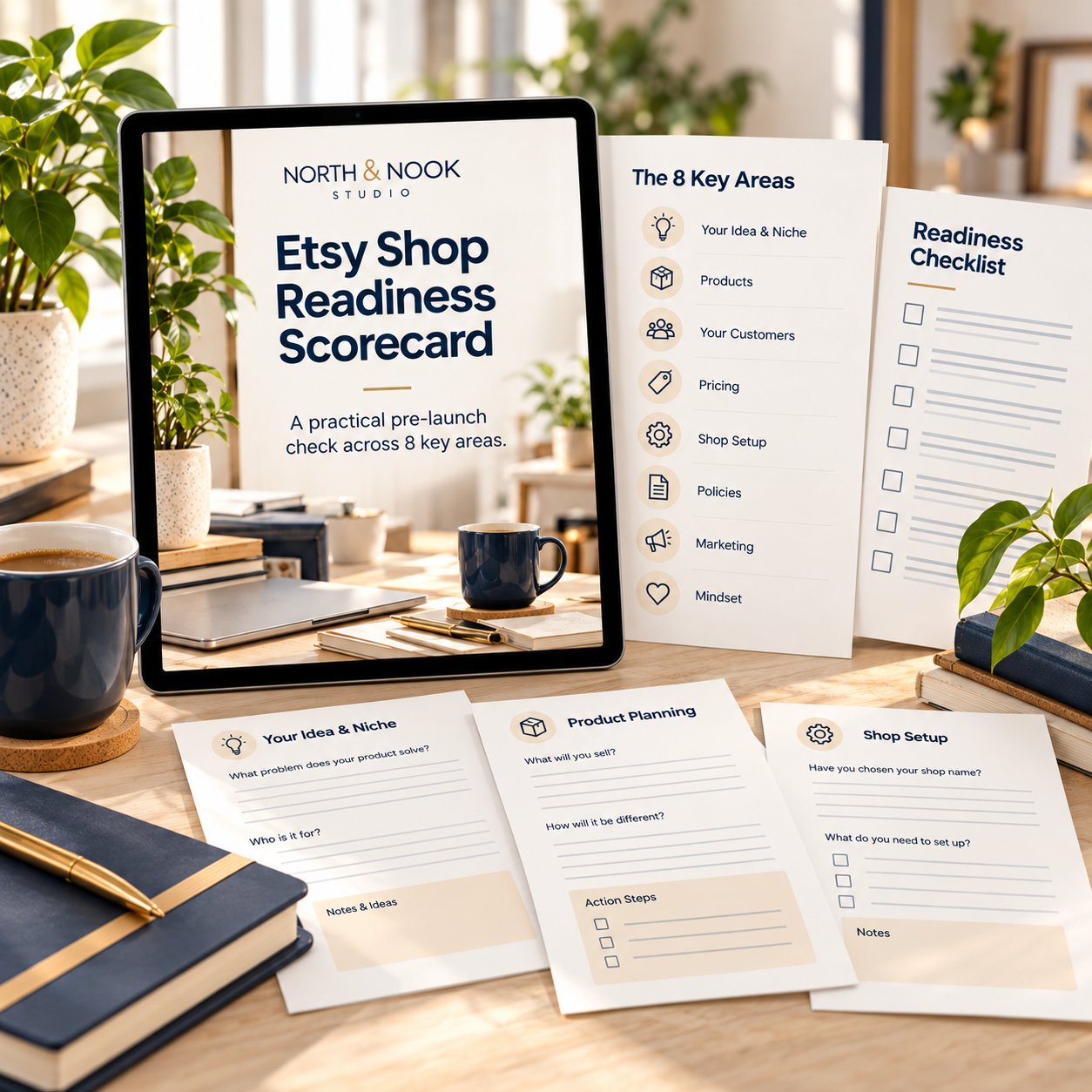
Prepare the shop experience—not just the products.
A buyer experiences more than a listing. Before opening, think through your shop identity, product information, listing imagery, policies, processing expectations and fulfilment.
Etsy’s current onboarding includes choosing shop preferences and a shop name, setting up payment and billing information, identity verification and two-factor authentication. Etsy also says a first listing is required before the shop can open. For listings, Etsy recommends clear descriptions, relevant titles and tags, useful attributes, quality imagery and accurate processing information.
Policies deserve attention too. What you need will depend partly on what you sell and where you operate, so use Etsy’s current policy tools and applicable local requirements rather than copying another shop’s wording.
Professional does not have to mean elaborate. Clear, complete and consistent information can do more for buyer confidence than decorative polish alone.
Have a plan for what happens after you open.
Opening the shop is a milestone, not the marketing plan. Decide how people may discover the shop, what you will measure and what you will review during the first few weeks.
Your early plan might include improving listings based on what you learn, developing a manageable content schedule, using Pinterest or social channels where they fit your audience, and reviewing which products and listings receive attention.
Most importantly, separate what genuinely needs to be ready for launch from what can be improved after launch. That helps prevent preparation from becoming endless.
Turn preparation into a structured launch.
The Etsy Shop Launch Lab is North & Nook Studio’s complete digital Etsy launch system. It brings together the course, implementation tools, worksheets, templates, checklists, examples and resources we’ve created to help prospective sellers move from preparation through launch with a clearer process.
Explore the Etsy Shop Launch Lab →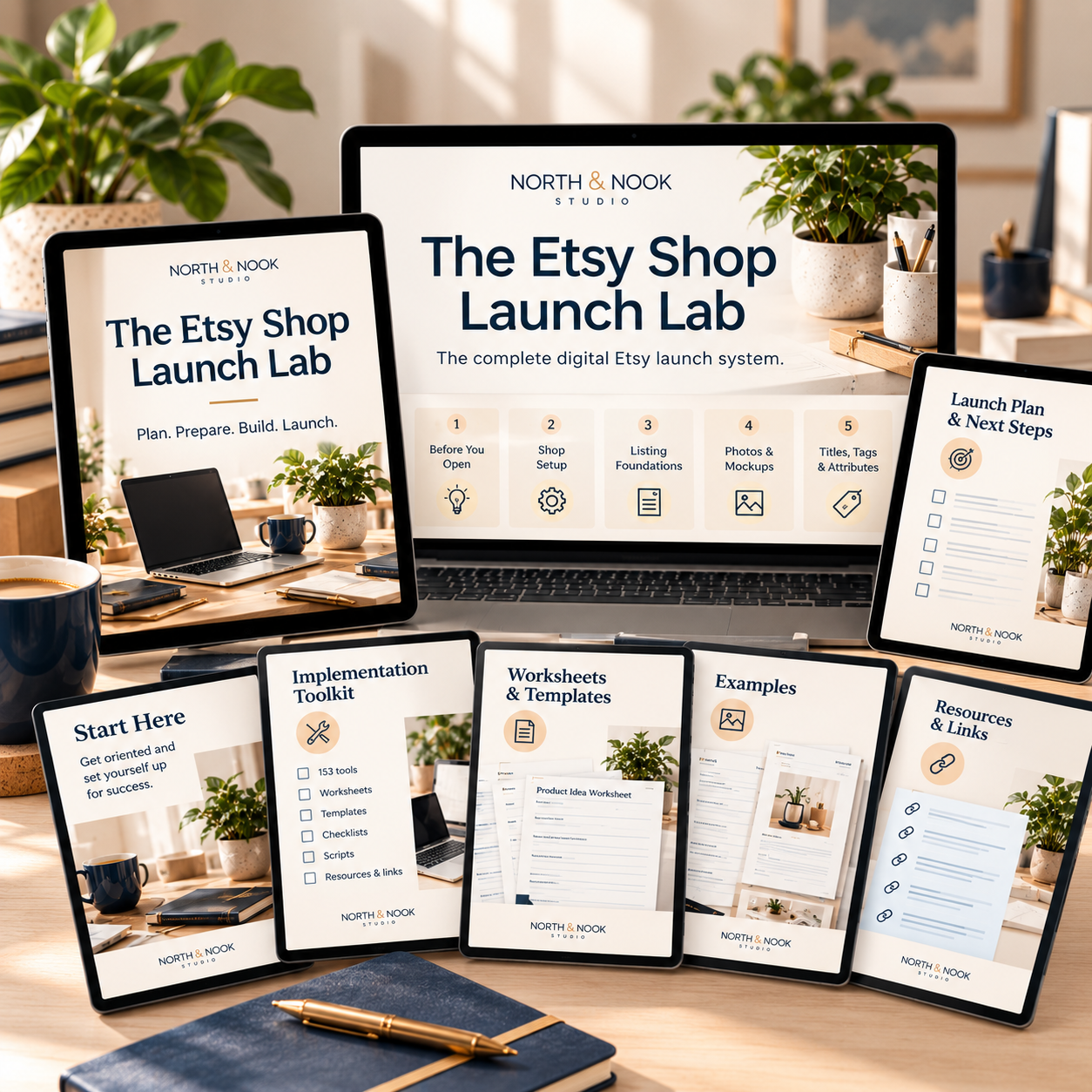
You do not need to know everything before you begin.
You do need a workable foundation. Get clear on the product, the buyer, the numbers, the shop experience and your first steps after launch. Then use what you learn from real activity to keep improving.
If you’re still unsure where the gaps are, the free Etsy Shop Readiness Scorecard is a practical next step.
Current Etsy references
Etsy platform requirements and fees can change. This article was checked against Etsy’s current official seller guidance in September 2026. Before opening a shop, verify the latest requirements directly with Etsy.
Etsy Help: How to Open an Etsy Shop · What Can I Sell on Etsy? · Fees and Taxes for Selling on Etsy
2 Comments
Comments are closed.