
Is Your Etsy Shop Idea Viable? 8 Things to Evaluate
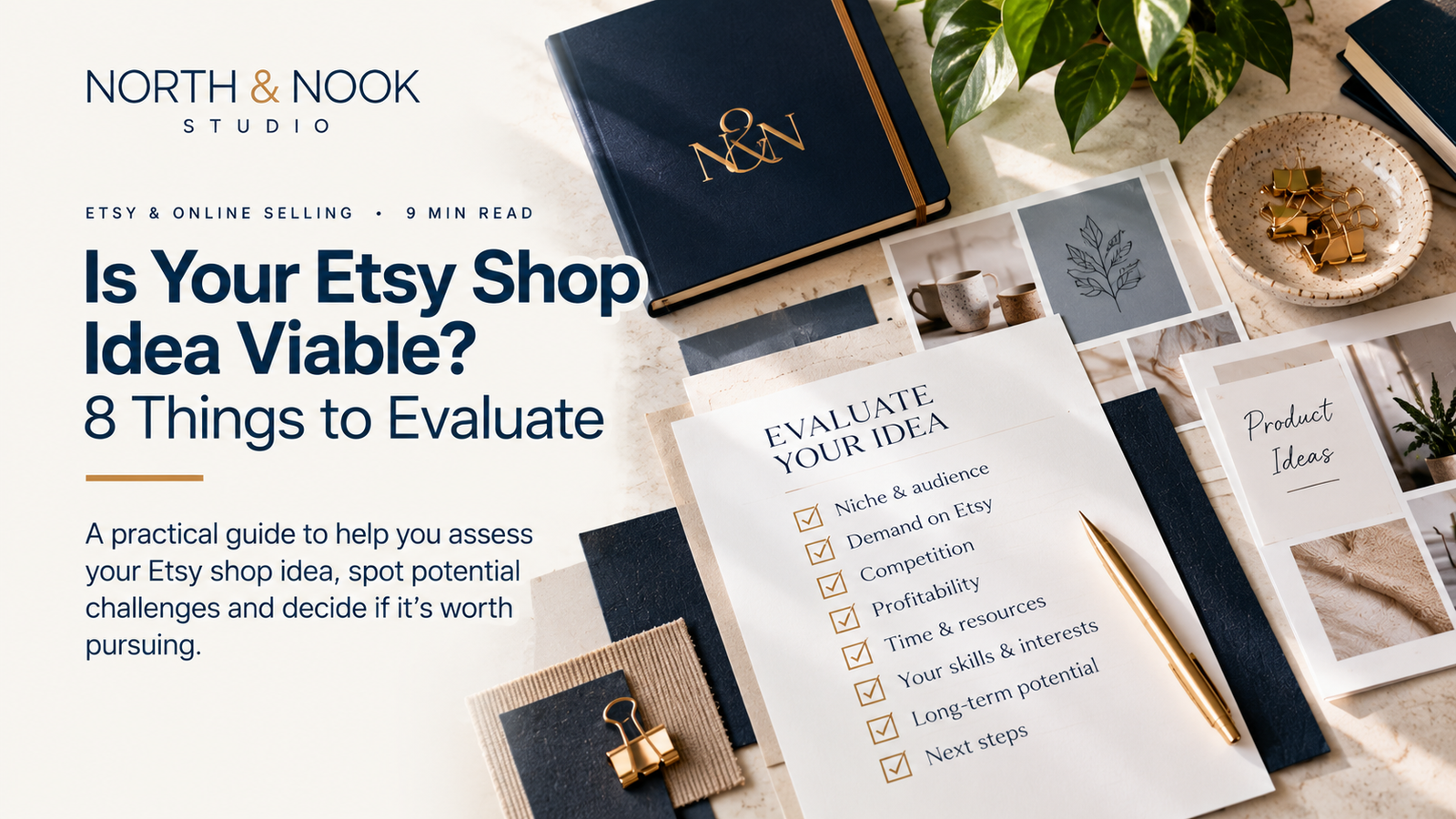
A viable Etsy shop idea is not simply an idea you like. It is an idea that fits the marketplace, makes sense for a specific buyer, can be priced sustainably and can realistically be delivered by you.
You do not need certainty before you begin. You do need enough evidence to decide whether an idea deserves more time, money and effort. That is what this guide is designed to help you evaluate.
Use these eight areas as a practical filter. A weak answer does not automatically mean “stop.” It tells you where the idea needs more research, adjustment or testing before you build an entire shop around it.
Does the idea actually fit Etsy?
Start with marketplace fit. Etsy currently requires items offered for sale to be made, designed, handpicked or sourced by the seller within its marketplace rules. Digital items must be made and/or designed by the seller. Etsy also has prohibited-item and intellectual-property policies that apply regardless of how promising an idea may seem.
Before evaluating branding, pricing or promotion, make sure the product itself belongs on the platform and that you can represent it accurately.
Validate the product before you validate the aesthetic. A beautiful brand cannot rescue an offer that does not fit the marketplace or the buyer.
Can you describe who would buy it—and why?
“People who like handmade things” is too broad to guide a shop. A stronger idea has a recognizable buyer, occasion, problem, interest or desired outcome attached to it.
Try describing one likely customer in plain language. What are they shopping for? Why now? What matters when they compare options? What would make them choose one product over another?
Is there evidence that people look for something like this?
You are not trying to prove that everyone wants the product. You are looking for signs that a relevant group of buyers already searches, shops or spends money in the category.
Search Etsy as a shopper would. Notice the language used in search suggestions and listings, the kinds of products that appear, price ranges, review activity and how sellers position similar offers. Then broaden the research beyond Etsy: search engines, communities, social platforms and competitor websites can help you understand the problem or interest behind the purchase.
Give your idea a structured readiness check.
The free Etsy Shop Readiness Scorecard helps you review eight key areas, see what already feels clear, spot what needs attention and decide what to work on first.
Get the Free Scorecard →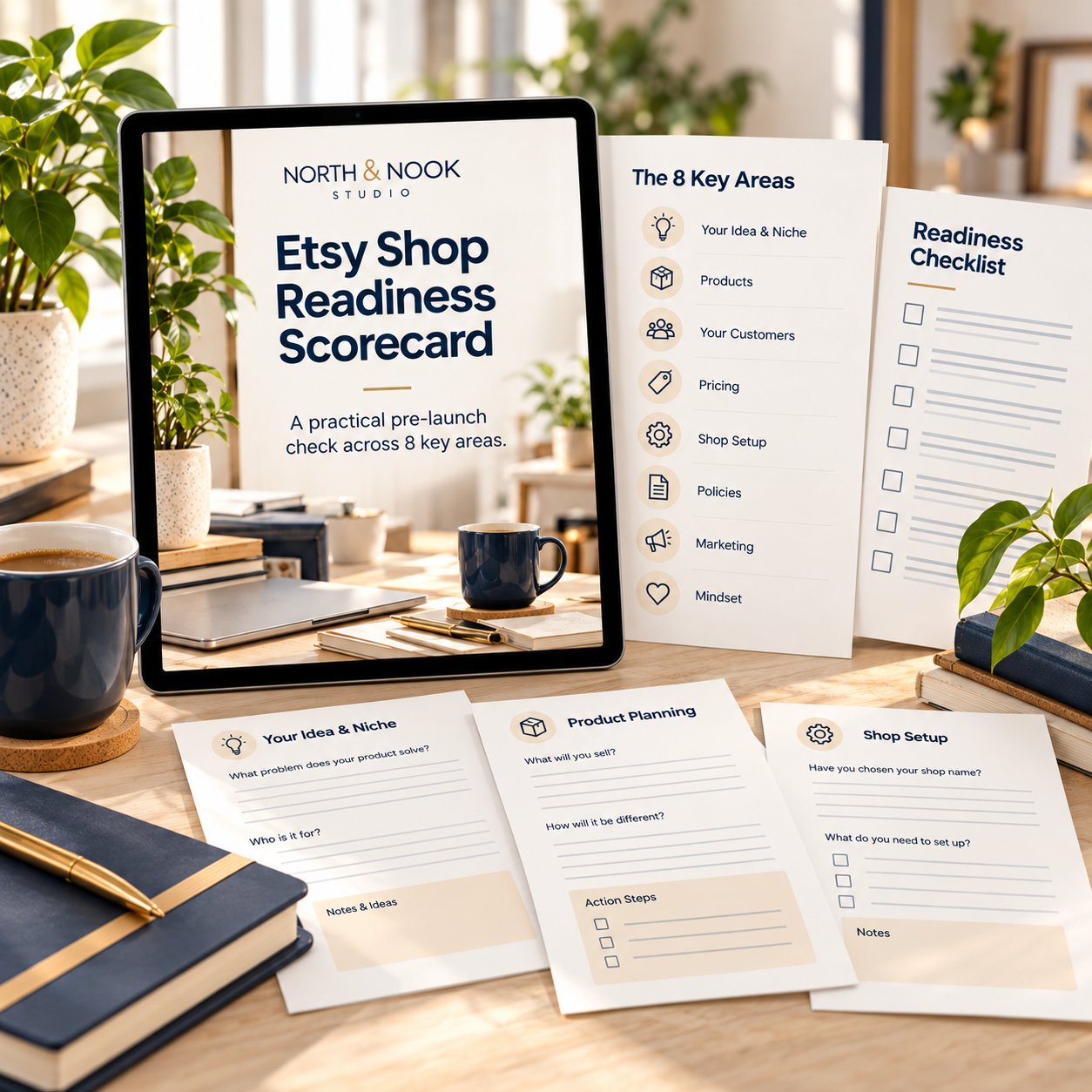
What does the competitive landscape tell you?
Competition is not automatically a reason to abandon an idea. It can be evidence that buyers exist. The useful question is whether you can see a credible place for your offer within that market.
Compare products, presentation, price points, personalization, formats, delivery expectations and the language sellers use. Look for patterns rather than trying to copy individual shops.
Look for four things
Can the numbers work before you count on sales?
A product can attract attention and still be a poor business idea if the economics do not work. Estimate your direct costs, packaging or delivery costs, the time required to produce or fulfill the order, and the Etsy fees that apply.
Etsy currently charges a listing fee and a transaction fee, and Etsy Payments transactions also carry payment-processing fees that vary by country. Other fees can apply depending on location and services used. Build your pricing from current costs and current Etsy fee information rather than from a competitor’s price alone.
Do not ask only, “Can I sell this?” Ask, “Can I sell this at a price that makes the work worthwhile?”
Can you realistically make and deliver what you are promising?
Viability includes your capacity. Think through how much time the product takes, how many orders you could handle, what happens during busy periods and which parts of fulfillment depend on outside suppliers or production partners.
For digital products, capacity may be less about inventory and more about file quality, customer instructions, updates and support. For physical products, production time, materials, packaging and shipping become central.
Can you explain why this version deserves attention?
You do not need to invent an entirely new category. You do need a reason your particular offer makes sense for the buyer you identified.
Your difference might come from the audience you serve, the problem you solve, the format, design approach, customization, bundle, use case, level of guidance or customer experience. The strongest difference is one the buyer can understand—not simply something you know is different behind the scenes.
Can you test the idea before building the whole shop around it?
Validation does not require months of research. At some point, the useful next step is a small real-world test.
You might finalize a small launch collection, show prototypes or mockups to people who resemble the intended buyer, test product language, calculate pricing with real inputs, or prepare a few strong listings instead of dozens. The goal is to learn before you over-invest.
Pay attention to what the test tells you. A promising idea may need a clearer audience, different format, better price structure or more distinctive positioning. That is useful information—not failure.
Move from evaluation to implementation.
The Etsy Shop Launch Lab is North & Nook Studio’s complete digital Etsy launch system, bringing together the course, implementation tools, worksheets, templates, checklists, examples and resources for a more structured path from preparation through launch.
Explore the Etsy Shop Launch Lab →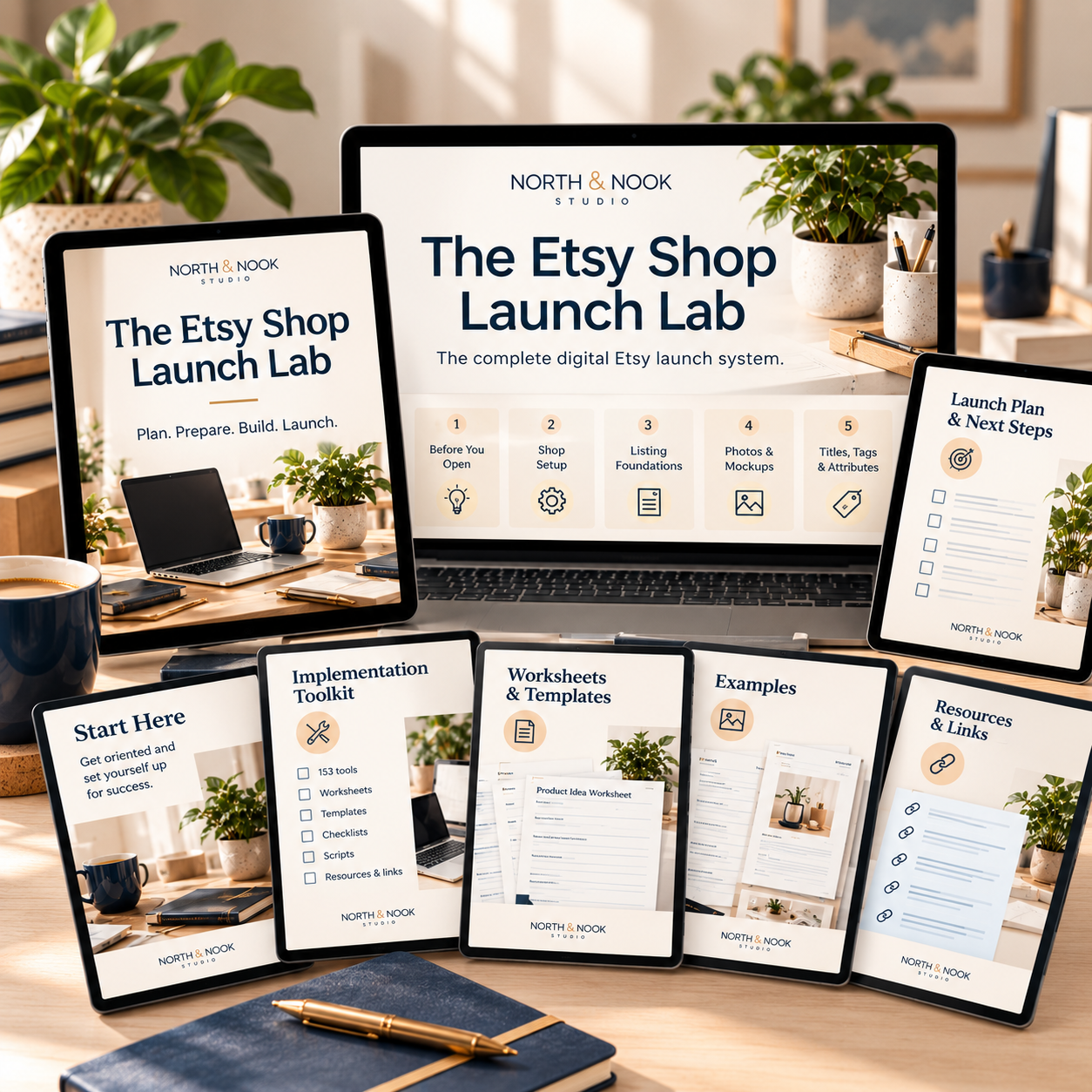
A viable idea does not have to be perfect. It has to be workable.
There is no research process that can guarantee a successful shop. What you can do is reduce avoidable guesswork. Check the marketplace fit, understand the buyer, look for demand, study the competitive landscape, run the numbers and make sure the idea fits your actual capacity.
Then test. Learn. Adjust. A smaller, clearer idea that you can execute well is often a stronger starting point than an ambitious shop built on assumptions.
2 Comments
Comments are closed.